Blade vs Burr Coffee Grinders: Why the Right Grinder Matters More Than the Brewer
A complete explanation of how blade and burr grinders differ — and why upgrading the grinder is the highest-impact change any home brewer can make.
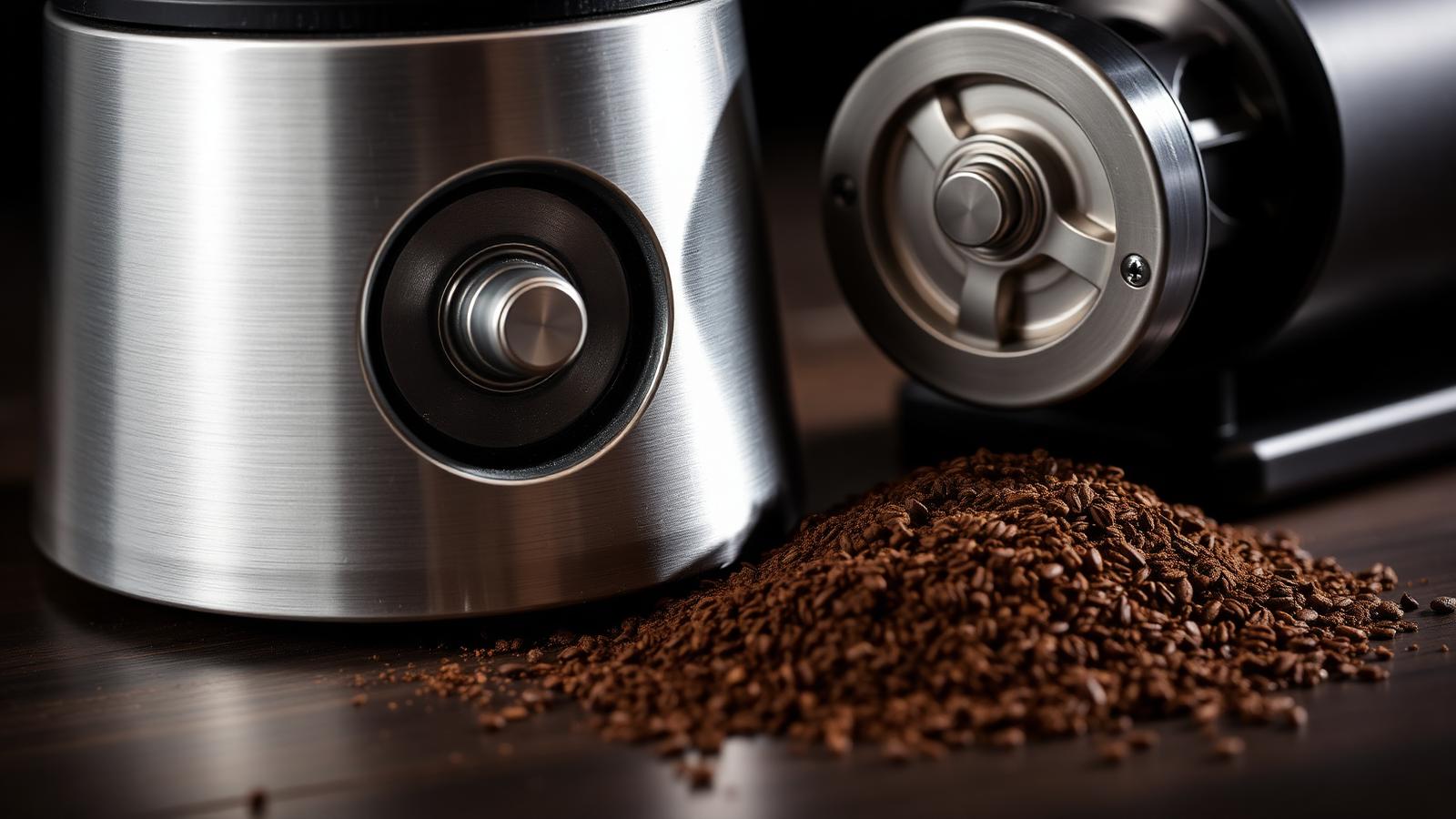
Ask any coffee professional what to buy first, and the answer is universal: a good grinder. It matters more than the brewer, the kettle, even the beans. Here's why.
What a grinder actually does
Brewing is just water extracting soluble compounds from coffee particles. The size, uniformity, and consistency of those particles determine how evenly water extracts flavor. Uneven particles brew unevenly — fine pieces over-extract into bitterness while coarse pieces under-extract into sourness, in the same cup.
Blade grinders
A blade grinder is essentially a tiny propeller spinning in a chamber. It doesn't grind — it chops**. The longer you run it, the smaller the average particle, but you always end up with a chaotic mix of dust and boulders.
Pros**: cheap ($20–$40), small footprint, dual-purpose for spices. Cons**: wildly inconsistent grind, heats the coffee, no settings.
Blade grinders are fine for emergency use. They are not fine for daily coffee.
Burr grinders
A burr grinder crushes beans between two abrasive surfaces (either conical or flat) spaced a precise distance apart. Adjust the spacing and every particle comes out roughly the same size.
Pros**: consistent grind, repeatable settings, dramatically better cup. Cons**: cost ($100–$1,000+), larger footprint.
Conical vs flat burrs
- Conical burrs**: more forgiving, often quieter, slightly more body in the cup. Common in entry- and mid-level grinders (Baratza Encore, ZpresSO Q2).
- Flat burrs**: tend to produce more uniform particles and brighter clarity. Common in espresso and high-end pour-over grinders.
For most home brewers, a quality conical burr grinder is the right starting point.
How to pick a starter burr grinder
Look for:
- At least 40 grind settings spanning espresso-fine to French press coarse.
- Steel burrs (not ceramic — ceramic burrs chip and lose calibration).
- Easy disassembly for cleaning (oils build up and go rancid).
- A reputable brand with replaceable burrs (Baratza, Fellow, 1Zpresso).
Manual or electric?
Hand grinders like the 1Zpresso JX-Pro and Timemore C3 punch above their weight, deliver excellent grind quality for $100–$160, and don't need an outlet. The tradeoff is 60 seconds of cranking per brew.
Common mistakes
- Buying an expensive machine before a decent grinder.
- Using a blade grinder for espresso (impossible, don't try).
- Never cleaning the burrs — old grounds turn rancid and ruin flavor.
If you only upgrade one thing this year, make it the grinder. Cheap beans through a great grinder beat great beans through a bad one, every time.