Coffee Scales 101: Precision Weighing for Better Brews
Often overlooked, a coffee scale is a game-changer for consistently delicious coffee. Discover why weighing your beans and water precisely isn't just for baristas, but a fundamental step every home brewer should embrace to unlock their coffee's full potential and eliminate brewing guesswork. Elevate your daily cup from good to exceptional.
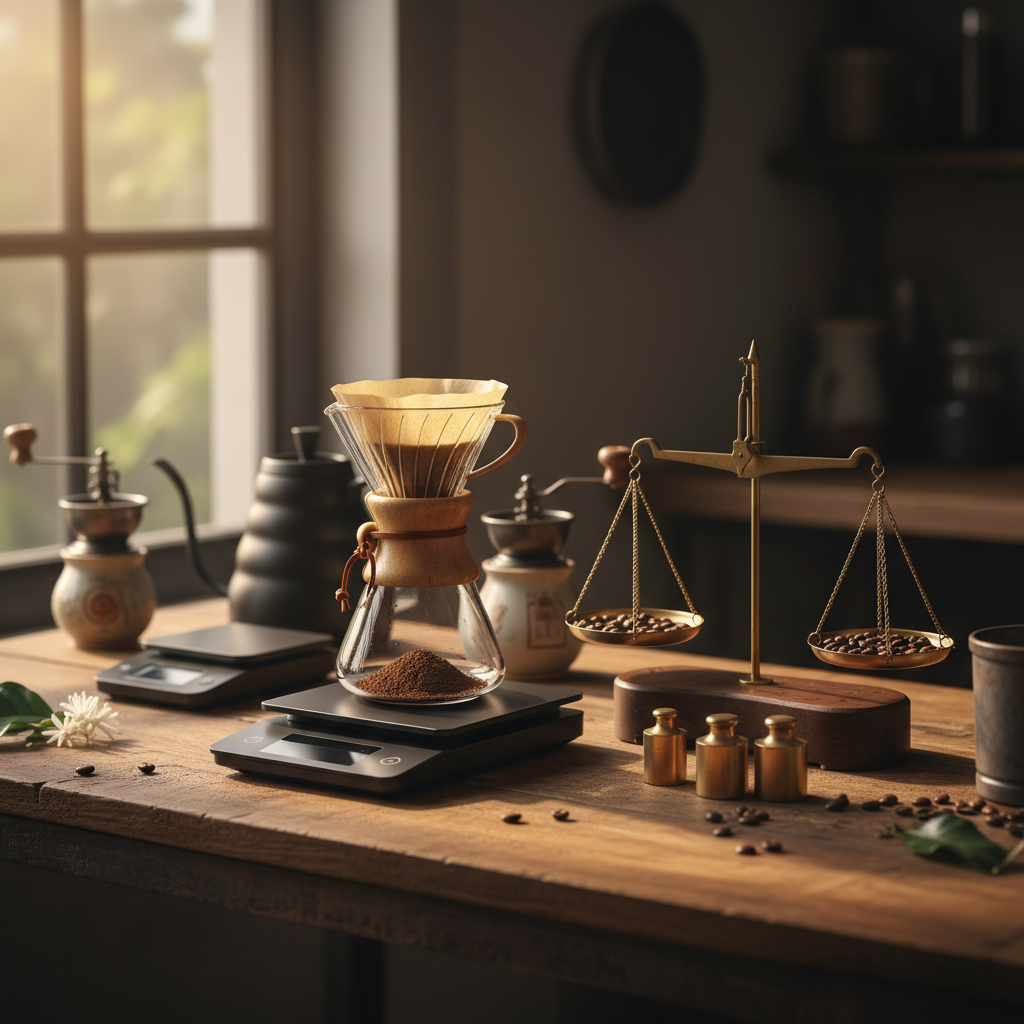
For many coffee enthusiasts, the journey to a perfect cup often involves upgrading grinders, exploring different brew methods, and splurging on exotic beans. Yet, one humble accessory consistently gets overlooked, despite its transformative power: the coffee scale. If you've been measuring coffee with spoons or eyeballing water levels, prepare to have your brewing world turned upside down. Precision weighing is the simplest, most effective way to elevate your coffee game.
The Problem with Volume Measurement
Think about it: when you bake, you wouldn't dream of scooping flour randomly without a scale, right? Baking is chemistry, and so is coffee brewing. Coffee beans, depending on their roast level, origin, and density, vary significantly in weight even if they occupy the same volume. A dark roasted bean, for instance, is often lighter and more porous than a denser, lighter roasted bean. This means a "tablespoon" of dark roast could be a vastly different weight—and therefore a different coffee-to-water ratio—than a tablespoon of light roast.
Measuring water by volume, especially in imprecise increments, introduces further variability. This inconsistency is the primary culprit behind those frustratingly unpredictable brews: one day it's perfect, the next it's weak, or worse, over-extracted and bitter.
The Power of the Coffee Scale
A coffee scale brings scientific precision to your brewing. By weighing your coffee beans and your water, you take the guesswork out of the equation. This allows for:
- Consistency: The same weight of coffee and water, brew after brew, means repeatable results. Once you dial in a winning recipe, you can reproduce it reliably.
- Optimal Extraction: Coffee brewing relies on specific ratios. A scale helps you hit these ratios accurately, ensuring you extract the ideal amount of flavor compounds without over or under-extracting.
- Experimentation: Want to try a 1:15 ratio instead of 1:17? A scale makes precise experimentation easy, helping you discover your personal preference.
- Resourcefulness: No more wasting precious beans on bad batches because of inconsistent measurements. Every gram counts.
Pro Tip: Start with a Golden Ratio
A good starting point for most brew methods is a 1:16 coffee-to-water ratio. This means for every 1 gram of coffee, you'll use 16 grams of water. Adjust from there based on your taste preferences for a stronger or weaker brew.
What to Look for in a Coffee Scale
Not all scales are created equal, especially for coffee. Here are key features to consider:
- Accuracy and Precision: Look for a scale that measures in 0.1-gram increments. This level of precision is crucial for fine-tuning your ratios.
- Capacity: Most coffee scales have a max capacity of 1-3 kg, which is sufficient for home brewing. Ensure it can handle the weight of your brewer, coffee, and water combined.
- Tare Function: This allows you to reset the scale to zero after placing a container on it, making it easy to weigh only the coffee or water you're adding.
- Timer: Many coffee-specific scales integrate a timer, which is incredibly useful for pour-over methods, helping you track bloom times and overall brew duration simultaneously.
- Size: Consider the footprint. Will it fit on your drip tray if you're using an espresso machine, or under your V60 and server?
- Water Resistance: Spills happen. A water-resistant surface or even a fully waterproof design can extend the life of your scale.
Integrating a Scale into Your Routine
Adding a scale might seem like an extra step, but it quickly becomes second nature. Here’s a basic workflow:
- Tare your empty grinding container: Place it on the scale and hit tare.
- Weigh your whole beans: Add beans until you hit your desired weight (e.g., 20 grams).
- Grind your beans.
- Prepare your brewer: For pour-over, place your brewer (e.g., V60) on your server, then place it all on the scale. Tare the scale.
- Add your ground coffee: Ensure it's evenly distributed.
- Tare the scale again.
- Begin your pour: Watch the weight display as you pour hot water. Aim for your target water weight based on your desired ratio (e.g., 20g coffee x 16 ratio = 320g water).
This simple process ensures every variable within your control is precisely managed, leading to a consistently delicious outcome.
Beyond Just Weighing: The Scale as a Tool for Improvement
A coffee scale isn't just about measurement; it's a tool for learning and improvement. When a cup tastes off, you can review your precise measurements. Did you use too little coffee? Too much water? It removes the ambiguity, empowering you to make informed adjustments. As you experiment with different beans and brew methods, your scale becomes an indispensable partner in developing your palate and refining your techniques.
The Unsung Hero of Coffee Brewing
In the grand tapestry of coffee brewing, the scale might seem like a minor thread. Yet, its impact is profound. By providing foundational accuracy, it allows all other aspects of your brewing—from grind size to water temperature—to have their intended effect. Invest in a good coffee scale, and you'll find that your coffee consistency and enjoyment will reach new, previously unattainable heights. It's a small investment that yields disproportionately large returns in your daily coffee ritual.