Mastering Your Brew: Common French Press Mistakes & Fixes
Is your French Press coffee not living up to its potential? Many coffee lovers fall victim to common pitfalls that compromise flavor and aroma. Discover the essential brewing techniques and simple fixes that will transform your daily cup from mediocre to magnificent, unlocking the full, rich body your French Press is capable of.
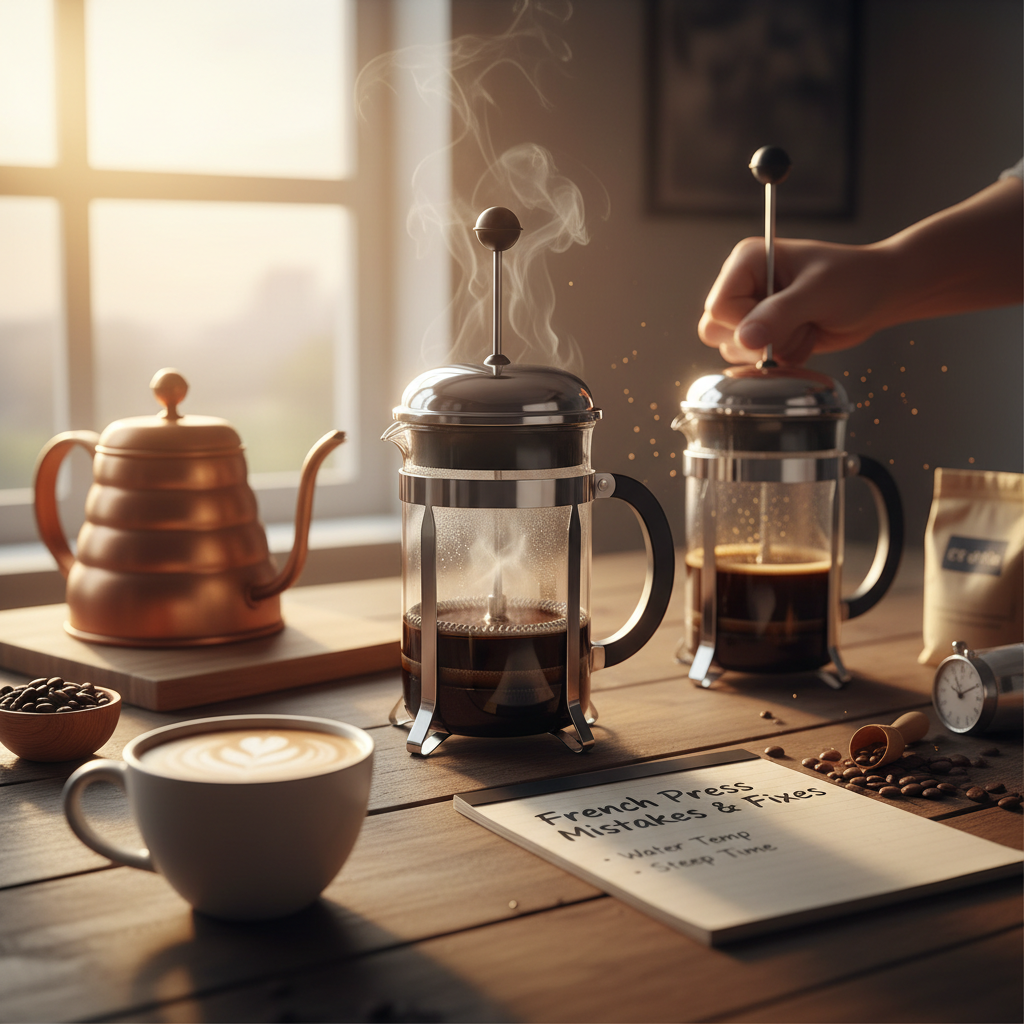
The French Press is a beloved brewing method, celebrated for its full-bodied coffee and straightforward elegance. Yet, despite its apparent simplicity, many coffee enthusiasts inadvertently make common mistakes that prevent them from achieving their perfect cup. If your French Press coffee tastes bitter, weak, or muddy, you're not alone. Let's delve into the most prevalent missteps and, more importantly, how to correct them, ensuring every brew is a masterpiece.
The Grind: A Foundational Flavor Blunder
Perhaps the most widespread French Press mistake is using the wrong grind size. Unlike drip coffee makers or espresso machines, the French Press requires a coarse, even grind. Why? A fine grind will easily slip through the mesh filter, leading to a sludgy, over-extracted, and bitter brew. It also increases the surface area exposed to water, accelerating extraction far beyond what's ideal for this immersion method.
The Fix:
Invest in a good quality burr grinder if you haven't already. Set it to a coarse setting, resembling sea salt or breadcrumbs. Consistency is key here; an uneven grind will still lead to both over and under-extraction, creating a muddled flavor profile. Grinding just before brewing is also crucial to preserve freshness and volatile aromatics.
Water Temperature: Hot But Not Scalding
Many assume hotter water is better for extraction. While hot water is essential, overly hot water can scald your coffee grounds, extracting undesirable bitter compounds and destroying delicate flavors. Conversely, water that's too cool will under-extract, resulting in a weak, sour, and unappealing cup.
The Fix:
The ideal water temperature for French Press coffee is between 195°F and 205°F (90°C and 96°C). If you don't have a thermometer kettle, a good rule of thumb is to bring your water to a boil and then let it sit off the heat for 30-60 seconds before pouring. This brief cooling period allows the temperature to drop into the optimal range.
The Ratio: Finding Your Brew's Balance
Coffee brewing is a science of ratios. Too much coffee leads to an intensely strong, potentially over-extracted brew, while too little results in a watery, under-extracted cup. Guessing is a common error that prevents consistency and quality.
The Fix:
Start with a universally recommended coffee-to-water ratio of 1:15 or 1:16. This means for every 1 gram of coffee, you use 15 or 16 grams of water. For example, if you're making a 300ml (approx. 300g) cup, you would use about 18-20 grams of coffee. A kitchen scale is your best friend here, ensuring precision and repeatable results.
BrewCraft Tip:
Always pre-heat your French Press carafe with hot water before adding coffee grounds. This prevents a sudden temperature drop when you add your brewing water, maintaining optimal extraction temperature throughout the process.
Steep Time: Patience is a Virtue
Impatience often leads to under-extraction, resulting in a weak, sour, or grassy flavor. On the other hand, leaving the coffee to steep for too long will over-extract, producing a bitter and harsh brew. Many simply guess their steeping time.
The Fix:
The sweet spot for French Press steeping is typically 4 minutes. Start a timer as soon as you pour all the water over the grounds. After 4 minutes, gently and slowly press the plunger down. If you press too quickly, you risk forcing fine particles through the filter and creating a murky cup. If you want a stronger brew, adjust your coffee-to-water ratio, not your steep time.
The Post-Brew Transfer: Don't Let it Sit
One of the most overlooked mistakes is leaving the brewed coffee in the French Press after plunging. Even after pressing, the coffee grounds remain in contact with the liquid. This continues the extraction process, leading to a progressively bitter and over-extracted taste as it sits.
The Fix:
Once plunged, immediately pour all the coffee from the French Press into a separate serving carafe or your cup. This stops the extraction at its peak, preserving the intended flavor profile. This simple step can dramatically improve the taste of subsequent cups if you're not drinking it all at once.
Final Thoughts: Elevate Your French Press Experience
Mastering the French Press isn't about complex techniques; it's about precision and attention to detail. By addressing these common mistakes, you can unlock the full potential of this classic brewing method. Remember the key elements:
- Coarse, even grind: Prevents bitterness and sludge.
- Optimal water temperature (195-205°F): Ensures proper extraction without scalding.
- Precise coffee-to-water ratio: Guarantees balance and consistency.
- Timed steeping (4 minutes): Achieves ideal extraction.
- Immediate transfer: Stops over-extraction post-plunge.
With these adjustments, you'll be well on your way to brewing consistently delicious, rich, and full-bodied French Press coffee that truly shines. Experiment slightly within these guidelines to find your personal perfect cup, and enjoy the rich rewards of a well-executed brew.