Mastering Coffee Grind Sizes: Your Ultimate Chart Guide
Unlocking the perfect cup of coffee starts with the right grind size. From the powdery consistency needed for a rich espresso to the coarse, chunky grounds ideal for a robust French press, understanding the nuances of coffee grind is paramount. This comprehensive guide and chart will demystify grind sizes, helping you achieve optimal extraction and flavor in every brew. Stop guessing and start brewing better coffee today!
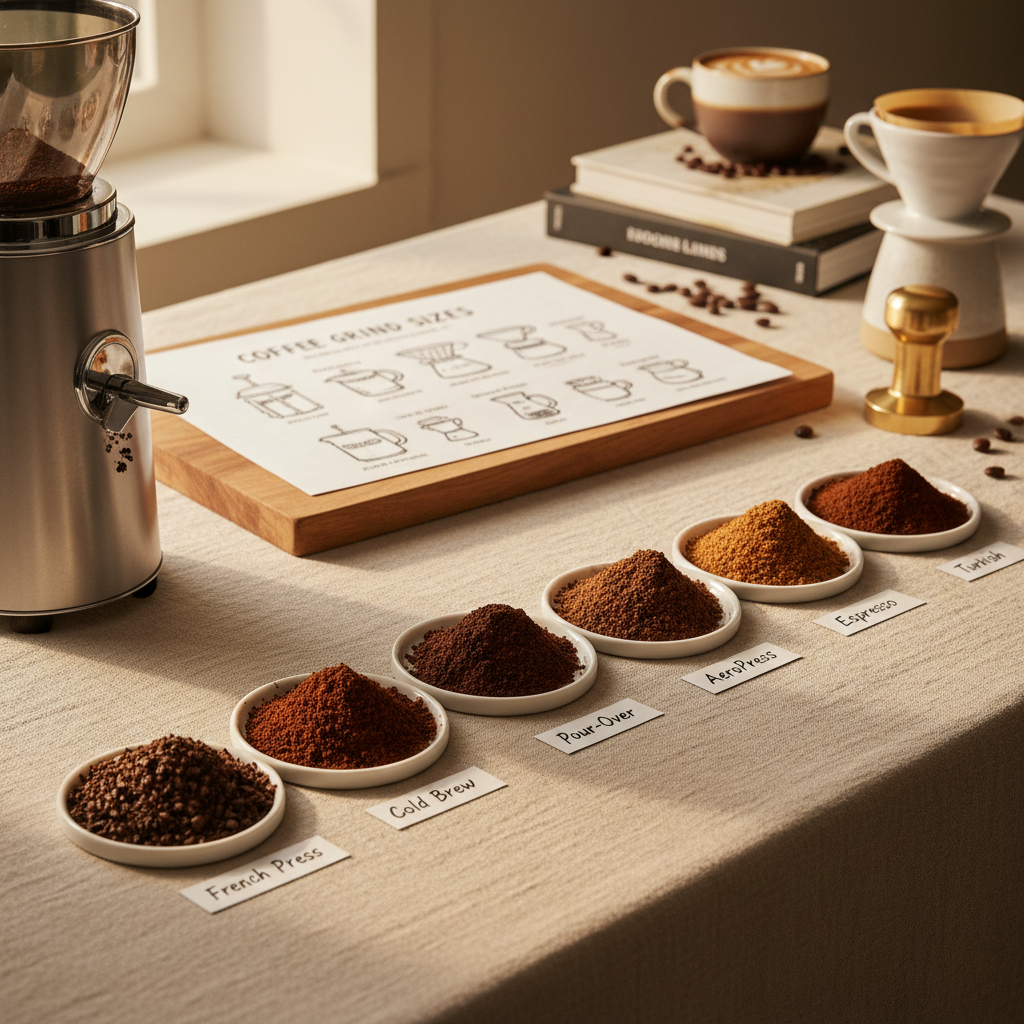
Achieving an exceptional cup of coffee is often attributed to high-quality beans and a skilled barista. However, a frequently overlooked, yet critically important, factor is the coffee grind. The size of your coffee particles directly influences the extraction rate – how quickly and effectively water pulls flavor compounds from the coffee. Too fine, and your coffee can be bitter and over-extracted; too coarse, and it might be weak and under-extracted.
This guide will walk you through the spectrum of coffee grind sizes, from the incredibly fine powder used in traditional espresso to the chunky consistency preferred by French press enthusiasts. With our ultimate grind size chart, you'll be able to confidently match your grind to your brewing method, ensuring a consistently delicious result every time.
Why Grind Size Matters So Much
Think of coffee brewing as a chemistry experiment. When hot water comes into contact with coffee grounds, it dissolves soluble solids like sugars, acids, and oils. The surface area of the coffee grounds dictates how quickly and thoroughly these materials dissolve. Finer grounds have a larger total surface area, meaning water can interact with more coffee particles faster. Conversely, coarser grounds have less surface area, requiring more contact time.
Matching the grind size to your brewing method is crucial because different methods have varying contact times and water flow rates:
- Espresso: High pressure, short contact time. Needs very fine grounds for rapid extraction.
- Pour Over: Medium contact time, gravity-fed flow. Requires a medium grind.
- French Press: Long contact time, full immersion. Needs coarse grounds to avoid over-extraction and sludge.
Understanding this fundamental principle is the first step toward brewing perfection.
The Ultimate Grind Size Chart
Let's break down the most common grind sizes and the brewing methods they best suit. Remember, these are general guidelines; slight adjustments may be necessary based on your specific grinder, coffee beans, and personal taste.
Extra Fine / Turkish
- Consistency: Like powdered sugar or flour. Silky smooth to the touch.
- Brewing Method: Turkish Coffee
- Characteristics: Extremely fast extraction due to maximum surface area. Essential for methods where grounds remain in the cup.
Fine
- Consistency: Like table salt. Slightly gritty when rubbed between fingers.
- Brewing Method: Espresso, Moka Pot, Aeropress (with short brew times)
- Characteristics: Creates resistance for pressurized brewing, allowing full flavor development in a short timeframe.
Medium-Fine
- Consistency: Finer than regular sand, but coarser than table salt. Still smooth, but with some discernible texture.
- Brewing Method: Aeropress (with longer brew times), Cone-shaped pour-over brewers (e.g., Chemex, Hario V60 with specific flow rates)
- Characteristics: A versatile grind, often a good starting point for many pour-over methods, balancing extraction speed and clarity.
Medium
- Consistency: Like regular sand. Clearly gritty, individual particles are visible.
- Brewing Method: Drip Coffee Makers, Flat-bottomed pour-over brewers (e.g., Kalita Wave), Siphon
- Characteristics: The most common grind for automatic drip machines, providing a balanced extraction over a typical brewing cycle.
Medium-Coarse
- Consistency: Like coarse sand or sea salt. Chunky, very distinct particles.
- Brewing Method: Chemex, Clever Dripper, Cafetiere (some preferences)
- Characteristics: Offers a slower extraction rate, ideal for brewing methods that require longer water contact time but still aim for a cleaner cup than a French press.
Coarse
- Consistency: Like coarse sea salt or breadcrumbs. Large, distinct chunks.
- Brewing Method: French Press, Cold Brew
- Characteristics: Essential for full immersion brewing methods with long contact times. Prevents over-extraction and minimizes sediment.
"Don't underestimate the power of your grinder. A consistent grind is just as important as the correct grind size. Even the perfect setting won't yield great results if your grounds aren't uniform."
Grinder Types and Grind Consistency
Your actual grinder plays a pivotal role in achieving a consistent grind. Blade grinders, which essentially chop coffee beans, produce an inconsistent mix of fine and coarse particles (called 'fines' and 'boulders'). This leads to uneven extraction and a subpar cup.
For optimal results, invest in a burr grinder (either manual or electric). Burr grinders crush beans between two abrasive surfaces, resulting in a much more uniform particle size. This consistency is key to even extraction and, ultimately, a better-tasting coffee.
Adjusting for Taste: Finding Your Sweet Spot
The grind chart provides an excellent starting point, but every coffee, roaster, and personal preference is unique. Don't be afraid to experiment!
- If your coffee tastes sour, weak, or watery: Your grind might be too coarse. Try grinding finer to increase extraction.
- If your coffee tastes bitter, astringent, or hollow: Your grind might be too fine. Try grinding coarser to reduce extraction.
Make small, incremental adjustments and taste after each change. Keep notes to remember what works best for different beans and brewing methods.
Conclusion: Your Journey to Better Coffee Starts with Grind
Mastering coffee grind sizes isn't just about following rules; it's about understanding the science behind extraction and how it impacts flavor. With this comprehensive grind size chart and the knowledge of why each size matters, you're well-equipped to elevate your home brewing. Remember to invest in a quality burr grinder, experiment with settings, and always trust your palate. Happy brewing!